
Wood vs. Upholstered Restaurant Chairs: Which Is Right for Your Dining Room
Key Takeaways
-
Wood restaurant chairs win on durability, cleaning speed, and long-term cost.
-
Upholstered chairs win on comfort, guest dwell time, and a premium feel.
-
High-turnover, casual, and family concepts usually favor wood or wood-look seating.
-
Fine dining, lounges, and slower-paced rooms benefit from upholstered comfort.
-
Many dining rooms do best mixing both, or using upholstered seats on wood frames.
Few furniture decisions shape a dining room as much as the chairs, and few chair decisions matter more than the choice between wood and upholstery. It affects how your space looks, how long your guests linger, how much your staff cleans, and how often you replace a broken seat. Both are proven choices in commercial dining. The right one depends on your concept, your traffic, and your budget over time, not just on the day you buy.
This guide breaks down wood restaurant chairs and upholstered restaurant chairs across the factors that actually decide the outcome: durability, comfort, cleaning, style, and total cost. By the end you will know which fits your dining room, or whether the smart answer is to use both.
Why the Chair Choice Matters More Than It Looks
A restaurant chair is not just a place to sit. It sets the tone a guest reads before the first menu arrives, it decides how comfortable a two-hour dinner feels, and it becomes one of your most-touched, most-abused assets. A dining room runs its chairs through thousands of sits, slides, spills, and wipe-downs a year.
That is why the wood-versus-upholstered question is really several questions at once. How hard will these chairs be used? How long do you want guests to stay? How much cleaning can your staff absorb? What look does your concept promise? A chair that is perfect for a slow, upscale bistro can be exactly wrong for a busy family diner, and the reverse is just as true.
Get it right and the chairs quietly support the business for years. Get it wrong and you pay for it in replacements, cleaning time, or guests who do not stay for dessert.
Wood Restaurant Chairs: The Durable Workhorse
Wood restaurant chairs are the traditional backbone of commercial dining, and they stay popular because they solve the problems that matter most in a working restaurant.
The Case for Wood
Durability. A quality commercial wood chair, especially solid beech or a comparable hardwood, takes years of daily use. There is no fabric to stain, tear, or fade, and a scratched finish can often be repaired rather than replaced. In a high-traffic room, that longevity is the whole argument.
Easy cleaning. A wood seat wipes clean in seconds. Spilled wine, dropped sauce, sticky fingerprints, all of it comes off with a cloth and cleaner, with nothing soaking into a cushion. For fast turns and tight labor, this speed is a daily advantage.
Design range. Wood is enormously versatile. From rustic farmhouse to sleek modern to classic bentwood, wood chairs span nearly every concept, and finishes from natural to dark walnut to painted let you match almost any palette. The bentwood category alone covers everything from vintage cafe style to clean contemporary lines.
Cost over time. Wood chairs often cost less up front than fully upholstered ones, and because they last and rarely need reupholstering, the lifetime cost stays low.
The Trade-Offs
Wood is harder than a padded seat, so comfort over a long meal is lower unless you add a seat cushion. Bare wood also reads more casual, which is a feature for a bistro and a limitation for a white-tablecloth room. And while wood is durable, it is not maintenance-free: finishes wear at contact points over years of use.
Browse the full range of wood restaurant chairs to see how wide the style span really is before deciding wood cannot deliver the look you want.
Upholstered Restaurant Chairs: Comfort and Atmosphere
Upholstered restaurant chairs trade some of wood's toughness for comfort and a more refined feel, and for the right concept that trade pays off directly in guest experience.
The Case for Upholstery
Comfort and dwell time. A padded seat and back make longer meals more pleasant, and comfortable guests stay longer, order another round, and come back. In concepts where the experience is the product, that comfort is a revenue lever, not a luxury. It is a big part of why upholstered chairs are so popular in restaurants today.
A premium look. Upholstery signals a higher price point and a more considered room. Fabric and vinyl come in nearly limitless colors, textures, and patterns, letting you match a brand palette precisely or add warmth a hard surface cannot.
Acoustic softening. Soft seating absorbs sound. In a busy room, upholstered chairs take a small but real edge off the noise, helping the space feel calmer and more comfortable to sit in.
The Trade-Offs
The honest downsides are durability and cleaning. Fabric can stain, absorb odors, and wear at the seat front, and heavy use eventually means reupholstering, an ongoing cost wood does not carry. Cleaning is slower, since a spill means treating a cushion rather than wiping a surface.
The fix for most of this is material choice. Commercial-grade vinyl and performance fabrics are built to resist stains, moisture, and wear, and many wipe down almost as easily as wood. If you go upholstered for a high-traffic room, the fabric spec is the decision that determines whether the chairs last. The fully upholstered chair collection is built around commercial-rated materials for exactly this reason.
Head to Head: Wood vs. Upholstered
Here is how the two compare on the factors that decide most dining rooms.
-
Durability: Wood leads. No fabric to stain or tear, and finishes can be repaired.
-
Comfort: Upholstery leads. Padding makes long meals easier and encourages guests to stay.
-
Cleaning: Wood leads. A wipe-down beats treating a cushion, and speed matters at busy turns.
-
Style range: Roughly even. Wood spans rustic to modern; upholstery spans casual to luxe with unlimited color.
-
Noise: Upholstery leads. Soft seating absorbs sound in a loud room.
-
Up-front cost: Wood usually leads. Fully upholstered chairs typically cost more per seat.
-
Lifetime cost: Wood usually leads. No reupholstering, longer service life.
-
Best for: Wood suits high-traffic and casual rooms; upholstery suits comfort-driven, upscale, and slower-paced rooms.
The pattern is clear. Wood is the durability-and-value choice; upholstery is the comfort-and-atmosphere choice. Neither is better in the abstract. The winner is the one that matches how your room actually operates.
Matching the Chair to Your Concept
The best way to decide is to start from your concept and traffic, not from the chairs.
Choose Wood When
Your room runs high volume and fast turns, where durability and quick cleaning matter most. Your concept is casual, rustic, farmhouse, cafe, or family-friendly, where a wood look fits naturally. Your budget favors low lifetime cost. Or you serve a lot of messy food and want seating you can wipe clean in seconds. Quick-service spots, cafe and bistro concepts, and busy family restaurants are natural wood territory.
Choose Upholstered When
Comfort and dwell time drive your business, as in fine dining, lounges, hotel restaurants, and destination spaces. Your concept is upscale, modern, or luxe and the seating needs to signal that. You want a specific brand color or texture only fabric can deliver. Or your room is loud and could use the acoustic softening upholstery provides.
Consider Both When
Many of the best dining rooms do not choose. They use upholstered banquettes or booths along the walls for comfort and wood chairs at the tables for durability, or they define zones, a lively wood-seated bar area and a plush upholstered dining section. Mixing materials adds visual interest and lets each area do its job.
The Hybrid Answer: Wood Frames With Upholstered Seats
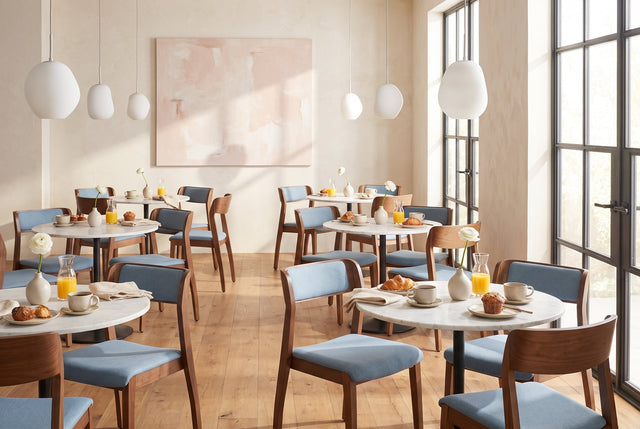
There is a middle path that captures much of both. A wood chair with an upholstered seat, or seat and back, gives you the structural durability and classic look of a wood frame with a padded, comfortable seating surface.
This hybrid is one of the most popular choices in commercial dining precisely because it splits the difference so well. You get wood's repairable, long-lasting frame and a comfortable seat that still cleans reasonably well, especially with a commercial vinyl. For many restaurants weighing wood against upholstery, the wood and metal and part-upholstered styles are the actual answer, not a compromise so much as the best of both.
Buying for a Commercial Dining Room
Whichever way you lean, the chairs have to be built for commercial use. A few things to confirm before a large order:
-
Commercial-grade construction rated for restaurant use, not residential furniture that fails fast.
-
For upholstered chairs, the fabric grade: commercial vinyl or performance fabric rated for heavy use and easy cleaning.
-
For wood chairs, joint construction: reinforced, well-glued joints outlast staples and last for years.
-
Weight ratings published for commercial use.
-
Minimum order quantities and lead times, since commercial suppliers often set a minimum and custom finishes take time.
-
Color and finish consistency across production runs, so reorders match.
Because deciding is easier in person, and because the durability question is worth thinking through carefully, it is worth reviewing samples and finishes before committing to a full dining room. And if your room runs high volume, it is worth weighing how different materials hold up, since durable seating for high-traffic spaces is its own consideration alongside the wood-versus-upholstered question.
Frequently Asked Questions
Are wood or upholstered chairs better for a restaurant?
Neither is universally better, because the right answer depends entirely on your room. Wood chairs are more durable, faster to clean, and lower in lifetime cost, which makes them ideal for high-traffic and casual concepts. Upholstered chairs are more comfortable and read as more upscale, which suits fine dining and comfort-driven spaces. Match the chair to your traffic level, your concept, and your budget over time rather than picking in the abstract.
Do upholstered restaurant chairs last as long as wood?
Generally no, because fabric wears at contact points, absorbs stains and odors, and eventually needs reupholstering, while a solid wood frame can last many years and often be repaired rather than replaced. That said, the gap narrows considerably with the right materials. Commercial-grade vinyl and performance fabrics over a sturdy frame resist stains and heavy use, holding up well even in busy rooms, so the fabric spec largely determines how long an upholstered chair survives.
Are wood restaurant chairs comfortable enough for long meals?
Bare wood is firmer than a padded seat, which is perfectly fine for casual dining and quick meals but less ideal for long, relaxed, upscale meals where guests linger for hours. The easy fix is to add comfort without giving up durability. A seat cushion, or a wood frame paired with an upholstered seat, gives you wood's structural toughness and repairability alongside the padded comfort a longer dining experience really needs.
Which is easier to clean, wood or upholstered chairs?
Wood is easier and faster to clean, since a spill wipes off the hard surface in seconds with nothing to soak into and no fabric to hold stains or odors. That speed is a real advantage during busy service with tight labor. Upholstered chairs take more care because a spill means treating the cushion, though commercial vinyl and stain-resistant performance fabrics close much of the gap and wipe down almost as easily as a wood seat.