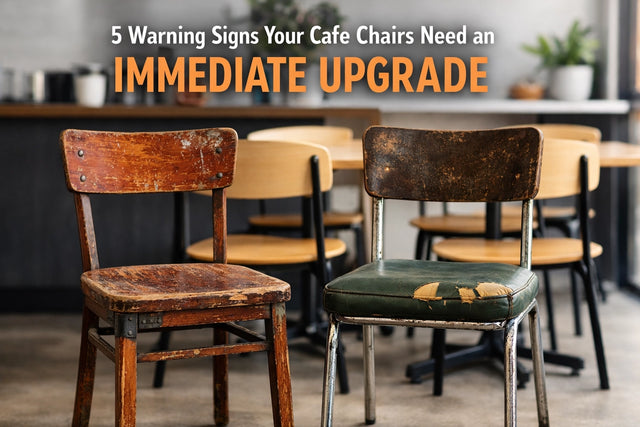
5 Warning Signs Your Cafe Chairs Need an Immediate Upgrade
Your cafe chairs work harder than almost any other piece of equipment in your space. They're sat on hundreds of times daily, dragged across floors, bumped into tables, and expected to look good while doing it. But there comes a point when those trusty seats stop being an asset and start becoming a liability.
Here's the reality: worn-out seating affects everything from your customer experience to your bottom line. Most cafe owners wait too long to address seating issues, often because the decline happens gradually. One day you're fine, the next you're reading a Yelp review mentioning "uncomfortable chairs" and wondering how you missed it.
Let's walk through the five clear warning signs that your cafe chairs need immediate attention: and what each one actually costs you in the long run.
Warning Sign #1: Visible Wobbling or Structural Instability
If your chairs wobble when someone sits down, you've already crossed into dangerous territory. This isn't about aesthetics: it's a safety issue.
Structural instability typically starts with loosened joints or hardware. Wood chairs develop gaps where mortise-and-tenon joints were once tight. Metal chairs lose bolt tension over time. The problem compounds itself: once a chair starts wobbling, the movement accelerates wear on all connection points.
What this costs you:
- Potential liability if a customer falls or gets injured
- Lost confidence from guests who notice instability immediately
- Accelerated damage to flooring from uneven weight distribution
- Staff time spent constantly checking and tightening hardware
Professional restaurant operators typically replace chairs when more than 15% of their seating shows structural issues. At that point, the labor cost of ongoing repairs exceeds replacement value.

Warning Sign #2: Upholstery Damage That Affects the Guest Experience
Ripped fabric. Stained cushions. Exposed foam. Cracked vinyl. These aren't just cosmetic problems: they're direct messages to your customers about your standards.
Upholstery damage happens faster in high-traffic cafes, especially near windows where UV exposure accelerates fading and material breakdown. But here's what most owners don't realize: customers notice upholstery condition within the first 30 seconds of sitting down. It's one of the fastest ways they assess whether your establishment maintains quality standards.
Some damage can be reupholstered, but that only makes financial sense if the chair frames remain structurally sound and the labor cost doesn't exceed 60% of new chair pricing. For most commercial-grade seating, you'll hit that threshold around the 5-7 year mark depending on daily traffic volume.
Key considerations:
- Stains that won't clean send hygiene concerns to customers
- Torn fabric catches on clothing, creating immediate negative experiences
- Mismatched repair patches look worse than coordinated wear
- Odor retention in damaged foam cannot be reversed
Warning Sign #3: Your Seating Collection No Longer Matches
Walk into your cafe and look around honestly. Do you see three different chair styles? Four? Mix-and-match can work intentionally, but if you've been replacing broken chairs one or two at a time with "whatever's available," you've created visual chaos.
Inconsistent seating tells customers you're managing decline rather than maintaining standards. It signals that your cafe might be struggling, even if that's not true. Interior design consistency matters in hospitality: it's part of the experience customers pay for.

This situation typically develops over 2-3 years as owners replace chairs individually rather than planning systematic updates. The solution isn't complicated, but it does require seeing your seating as a complete collection rather than individual units.
Strategic approach:
- Calculate the cost of replacing your entire seating collection at once
- Compare that to your current annual chair replacement spending
- Factor in the marketing value of a cohesive, intentional design
- Consider wholesale pricing options that make complete refreshes financially viable
Warning Sign #4: Customers Are Choosing Tables Based on Chair Comfort
Pay attention to your seating patterns. If customers consistently avoid certain areas or request specific tables, your chairs might be the reason.
This behavior shows up in subtle ways. Guests glance at chairs before committing to a table. Groups move to different sections even when their first choice has availability. Your staff mentions that customers ask about "the more comfortable chairs" in certain zones.
Once customers start self-selecting based on chair comfort, you're losing revenue. Less desirable sections sit empty during peak hours while comfortable areas reach capacity. You're effectively reducing your functional seating capacity because portion of your chairs have become unusable in the eyes of your customers.

A 2024 study of independent cafes found that establishments with inconsistent seating comfort experienced 12-18% lower table turnover in affected sections compared to areas with uniform, comfortable seating. That's significant revenue loss from a completely fixable problem.
Warning Sign #5: Increased Customer Complaints or Negative Review Mentions
The most definitive warning sign comes directly from customer feedback. When seating comfort or condition appears in negative reviews, it's time for immediate action.
Online reviews have amplified this issue. A single mention of uncomfortable or damaged seating reaches hundreds or thousands of potential customers. According to hospitality industry data, seating-related complaints in reviews correlate with a 7-9% reduction in new customer conversions.
Common review phrases that signal serious issues:
- "Chairs were uncomfortable, couldn't stay long"
- "Seating looked worn out and dated"
- "Had to move tables because the chairs were wobbly"
- "Great food but the furniture needs updating"
These comments don't exist in isolation. For every customer who leaves a review, an estimated 10-15 others had the same experience but didn't write about it. By the time seating issues appear in online feedback, you're already experiencing significant business impact.

The Real Cost of Waiting
Delaying chair replacement might seem like budget-conscious decision-making, but the math tells a different story. Consider what worn-out seating actually costs:
Direct costs:
- Ongoing repair labor and materials
- Replacement of individual chairs at higher per-unit pricing
- Potential liability insurance claims from seating failures
Indirect costs:
- Reduced table turnover in uncomfortable sections
- Lost customers who choose competitors with better ambiance
- Negative review impact on customer acquisition
- Staff morale issues when seating becomes a recurring complaint
The average cafe chair in commercial use should last 5-7 years before requiring replacement. If you're repairing chairs more than twice annually, or if any of the five warning signs apply to more than 20% of your seating, the financial case for complete replacement becomes clear.
Making the Upgrade Decision
Replacing your cafe seating represents a significant investment, but it's also one of the highest-ROI improvements you can make. New chairs immediately elevate your entire space, improve customer comfort, and eliminate ongoing maintenance headaches.
When planning your upgrade, consider:
Durability standards: Commercial-grade seating built for hospitality use will outlast residential-quality furniture by 3-5 years. The upfront cost difference typically pays for itself within 18 months through reduced replacement frequency.
Style consistency: Choose a seating collection that works throughout your space, not individual chairs. This creates visual cohesion and makes future replacements straightforward.
Vendor reliability: Work with suppliers who maintain consistent inventory. This ensures you can reorder matching pieces years later if needed. The Chair Market maintains one of the industry's largest in-stock selections specifically to address this need.

Budget planning: Most successful cafe operators budget for complete seating replacement every 5-7 years rather than reactive individual replacements. This approach reduces long-term costs and maintains consistent quality standards.
Moving Forward
Your chairs are one of the few elements in your cafe that customers physically interact with for their entire visit. Unlike decor that they glance at or equipment they never see, seating directly affects comfort, dwell time, and overall experience.
If you've recognized any of these five warning signs in your own space, you're not alone: and you're not too late. Most cafe owners wait longer than they should to address seating issues, simply because the decline happens gradually and there's always something else demanding immediate attention.
The best time to upgrade your seating is before customers start mentioning it in reviews. The second-best time is right now.
For cafes ready to make the upgrade, explore commercial seating options designed specifically for high-traffic hospitality environments. With over 500 in-stock styles and wholesale pricing, you can refresh your entire space without the extended lead times or premium pricing of custom orders.
Your customers will notice the difference: and so will your bottom line.