
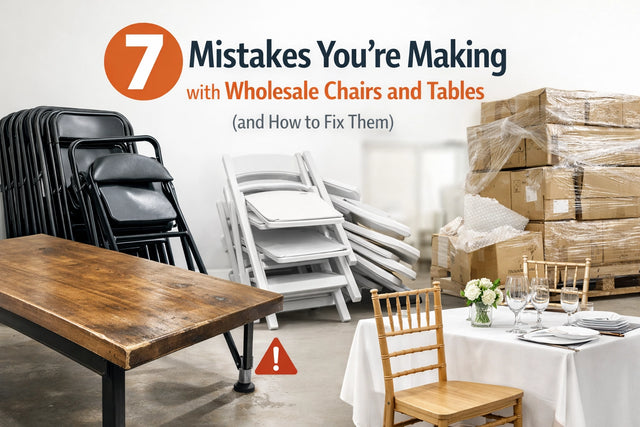
7 Mistakes You're Making with Wholesale Chairs and Tables (and How to Fix Them)
Buying wholesale furniture for your restaurant, hotel, or event venue should feel like a win. You're saving money, getting exactly what you need, and setting up your space for success. But somewhere between placing that order and opening night, things can go sideways fast.
The truth? Most buyers make the same handful of mistakes: and they don't realize it until the chairs start wobbling or the storage room becomes a stacking nightmare. We've seen it happen hundreds of times over our 50 years in the business.
Let's walk through the seven biggest mistakes we see (and more importantly, how to avoid them).
Mistake #1: Choosing Price Over Quality Every Single Time
Look, we get it. Budgets are tight. When you're furnishing an entire venue, every dollar counts. But here's what happens when you go with the cheapest option: You end up buying twice.
That $40 chair might look identical to the $75 one in the product photo. But six months in, the joints loosen, the finish chips, and suddenly you're replacing half your seating before your first anniversary.
The Fix: Focus on cost per year, not cost per chair. A quality chair that lasts 10 years costs less annually than a cheap one you replace every 18 months. Ask suppliers about frame construction, joinery methods, and finish durability. At The Chair Market, we're upfront about which products are built for heavy commercial use versus lighter applications: because the wrong choice costs you more in the long run.

Mistake #2: Forgetting to Think About Who Actually Sits in Them
Here's a scenario we hear constantly: A buyer loves a sleek, low-profile chair because it photographs beautifully. Then reality hits. Your customers are families with elderly grandparents who struggle to stand from low seating. Or you run a sports bar where the average patron is 6'2" and needs proper back support.
Designing for Instagram instead of your actual guests creates problems fast.
The Fix: Know your customer base before you browse catalogs. If you serve an older demographic, prioritize chairs with arms and higher seat heights. High-traffic quick-service spots? Focus on easy-to-clean materials and sturdy construction. Family restaurants need chairs that accommodate car seats and booster seats. Take time to understand the real-world use case, not just the aesthetic you're chasing.
Mistake #3: Ignoring Stackability and Storage Reality
You ordered 200 banquet chairs because your venue hosts events. They arrive, they look great, and then you realize they only stack 6-high and your storage room has 8-foot ceilings. Now you're renting additional storage space monthly because nobody asked about stack height during ordering.
Or worse: you bought chairs that technically stack, but they're so heavy that your staff dreads event setup. Employee satisfaction matters.
The Fix: Before ordering, measure your actual storage space and calculate how many chairs need to fit. Ask suppliers for specific stack heights and weight per chair. A stackable banquet chair that reaches 10-12 units high saves serious floor space. Also consider chairs with built-in handles or dolly compatibility for easier transport during setup.

Mistake #4: Missing the Indoor vs. Outdoor Durability Ratings
This one sneaks up on venues with patios or mixed-use spaces. You find gorgeous chairs at a great price, order 50 units, and split them between your dining room and outdoor terrace. Fast forward three months: The outdoor chairs are fading, the metal is oxidizing, and you're dealing with mold in the upholstery after a rainy week.
Not all furniture is rated for outdoor use, and "water-resistant" doesn't mean "weatherproof."
The Fix: Always confirm the environmental rating before ordering. Indoor-only furniture has different finish requirements than outdoor-rated pieces. If you're using chairs in covered but open-air spaces, clarify what "covered outdoor" means to your supplier. UV-resistant finishes, powder-coated metals, and commercial-grade outdoor fabrics aren't optional: they're essential. And if you're using plastic chairs outdoors, make sure they're specifically UV-stabilized. Quality plastic chairs designed for commercial outdoor use will last years; discount versions will crack within months.

Mistake #5: Choosing the Wrong Frame Material for Your Environment
Wood looks classic. Metal looks modern. Plastic looks... economical. But the frame material you choose matters way beyond aesthetics: especially in commercial settings where daily wear adds up fast.
We've seen restaurants install beautiful wooden chairs in high-humidity kitchens only to watch them warp within a year. Metal chairs placed near ocean-view windows rust prematurely. It's not about which material is "best": it's about matching material to environment.
The Fix: Consider your specific conditions. High-humidity areas (near kitchens, pools, coastal locations) do better with powder-coated aluminum or quality plastics. Dry climates with temperature control are perfect for wood. Metal frames excel in high-traffic areas but need proper protective finishes in moisture-prone spaces. Wood chairs bring warmth to dining rooms but require climate consideration. Match the material to the space, not just the design board.
Mistake #6: Underestimating Lead Times and Ordering Too Late
You've finalized your design. Your contractor gives you an opening date. You place your furniture order six weeks out. Then you learn the lead time is actually 10-12 weeks for that custom finish you requested.
Now you're scrambling to find in-stock alternatives, probably paying more, and possibly compromising on what you really wanted.
The Fix: Ask about lead times during the planning phase, not the ordering phase. Standard products ship faster than custom orders. If you have a firm deadline, prioritize in-stock options or items with confirmed quick-ship timelines. Build in buffer time: things happen. Shipping delays, backorders, and manufacturing hiccups are part of wholesale furniture reality. Order early, confirm delivery dates in writing, and have a backup plan for must-have items.

Mistake #7: Overlooking Hidden Costs That Inflate Your Budget
You got a great price per chair. Then the invoice arrives: shipping fees, crating charges, liftgate service, inside delivery, assembly requirements. Suddenly your per-unit cost jumped 30% and you're over budget.
Hidden costs kill more furniture budgets than the actual product pricing.
The Fix: Get all-in pricing before committing. Ask specifically about:
- Freight charges and whether they're per piece or per shipment
- Crating and packaging fees
- Delivery requirements (dock vs. inside delivery vs. white glove)
- Assembly costs if products ship unassembled
- Minimum order quantities that affect per-unit pricing
- Return or exchange policies and associated fees
Reputable suppliers provide transparent pricing upfront. If someone's dodging these questions, that's your red flag.
The Bottom Line
Wholesale chair and table buying doesn't have to be complicated, but it does require asking the right questions before placing orders. The venues that get it right think beyond the initial purchase: they consider durability, real-world use, storage logistics, environmental factors, timing, and total cost.
Take time during the planning phase. Ask detailed questions. Work with suppliers who've been around long enough to understand commercial hospitality needs. Your furniture investment should support your business for years, not create problems you didn't anticipate.
Need help navigating your next furniture order? We've been supplying commercial and hospitality spaces for 50 years. Visit The Chair Market or reach out directly: we're happy to talk through your specific needs before you commit to anything.